


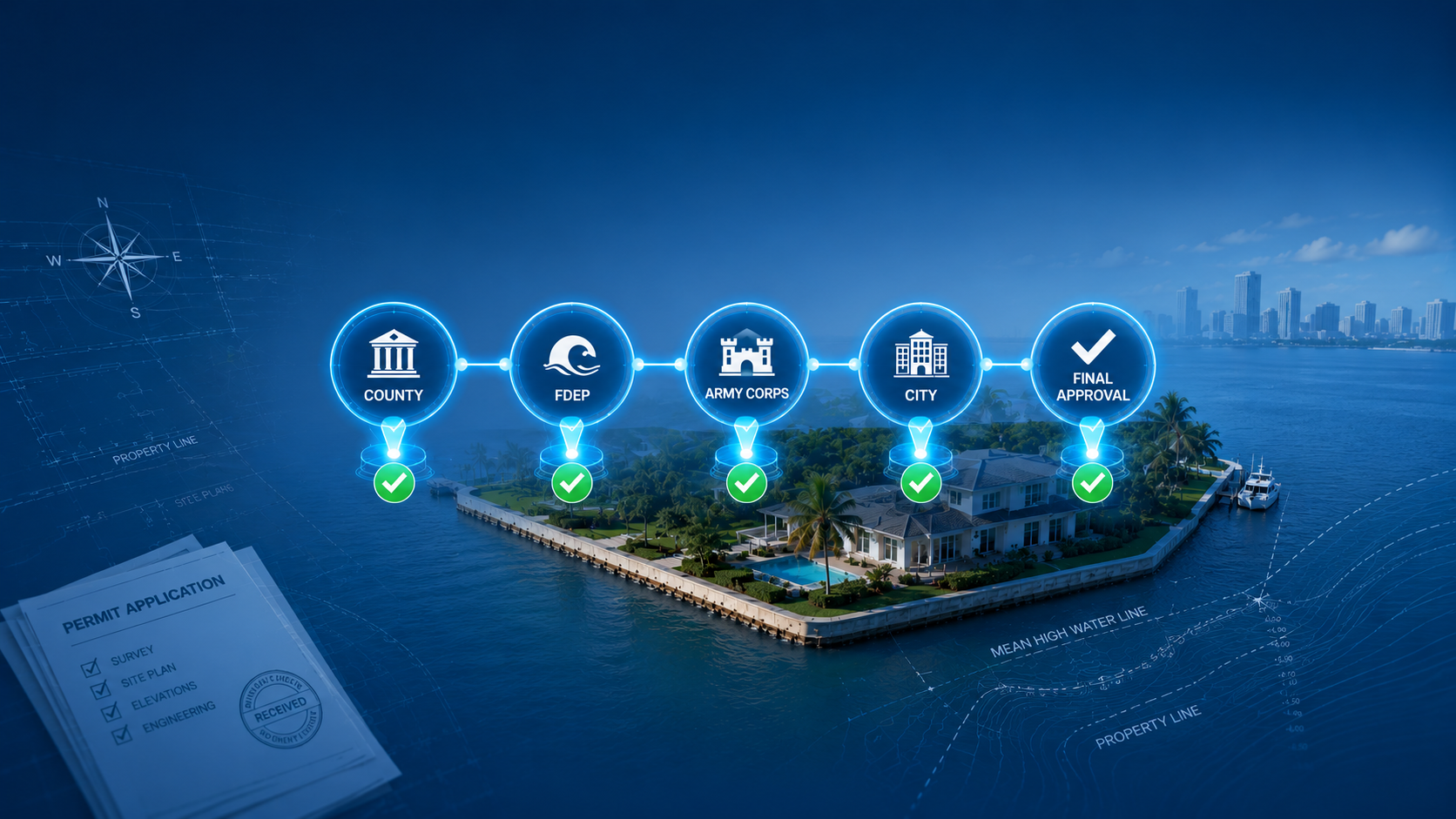
Building on waterfront property in South Florida requires permits from multiple agencies. Your local building department, the local County environmental agency, the Florida Department of Environmental Protection, the Army Corps of Engineers, and sometimes the South Florida Water Management District all have a say in your project. Each agency has its own review timeline. If your application is incomplete or contains errors, the review clock resets.
A project that should take 9-10 months can easily stretch to a year. The strategies below will help you stay on the shorter timeline. By following the right steps before you submit, you can avoid common pitfalls that cause rejections and delays.
Common Factors That Cause Waterfront Permit Delays
Several issues routinely slow down waterfront permit applications.
- Incomplete applications trigger resets of the review clock.
- Outdated surveys fail to show current shoreline conditions.
- Seawall issues are flagged only after submission.
- Environmental permits conflict with building permit requirements.
- Lack of local knowledge leads to noncompliant designs.
Key Documentation Needed for a Smooth Application
Proper documentation upfront prevents many common delays.
- Order a new boundary survey showing the mean high water line.
- Ensure the survey includes all easements and existing structures.
- Include photographs, site plans, and vegetation surveys as needed.
- Confirm all documents match the latest agency requirements.
The Seawall Condition Check and Its Timing
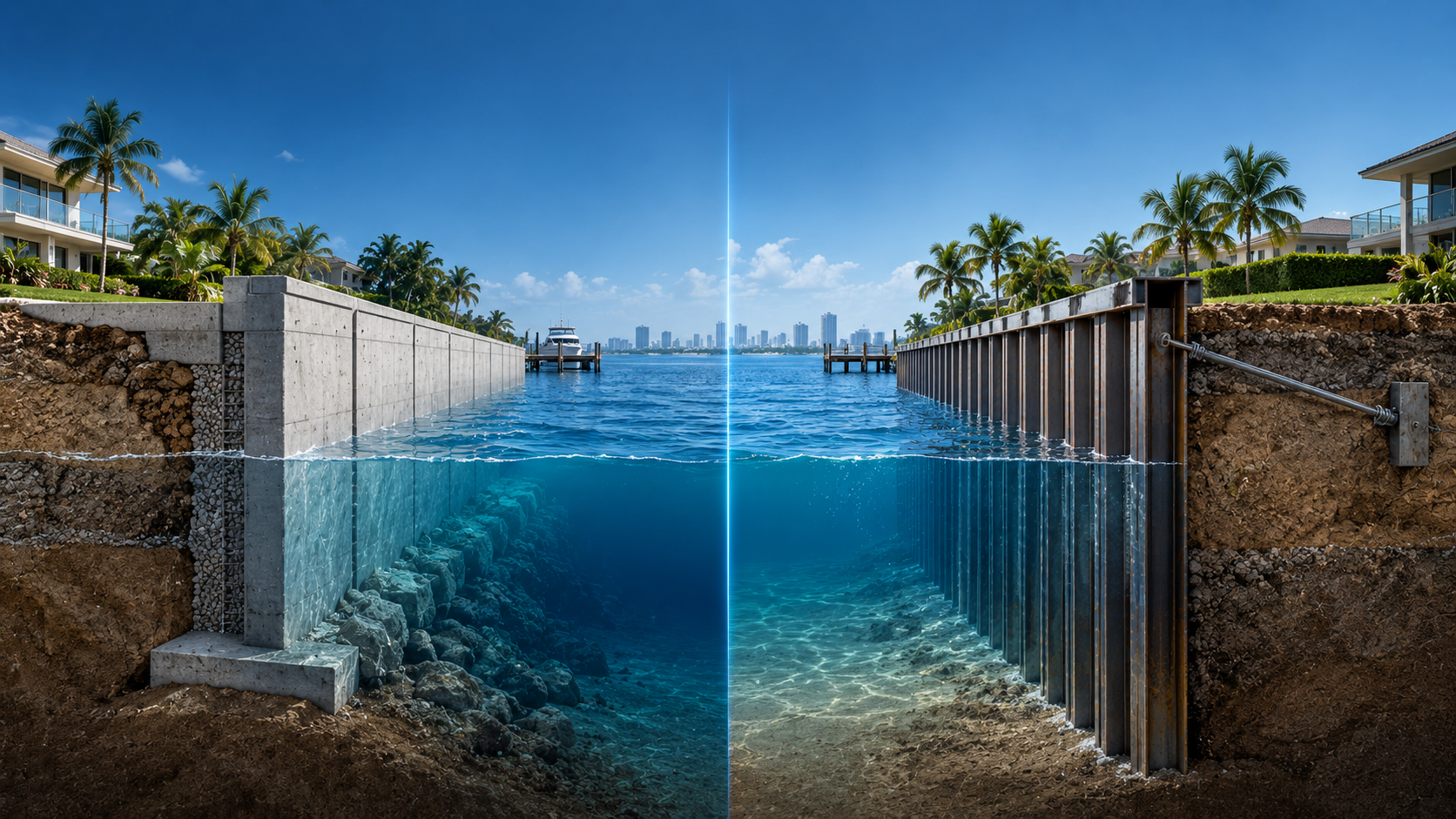
If your property has an existing seawall, the building department will likely require a condition assessment before they approve your project. A seawall that is leaning, cracked, or showing signs of soil piping will result in a permit hold until repairs are completed. Hire a structural engineer who specializes in marine structures to inspect your seawall before you file the permit application.
Attach a passing inspection report to your submission. If the wall fails, order repairs immediately. Be aware that marine repair contractors often have lead times of three to six months. Addressing the seawall proactively keeps your application moving through a single review path instead of waiting for the building department to flag the issue later.
Sequencing Your Permits for Faster Approval
Submitting all permit applications at the same time may seem efficient, but it often causes delays. When a reviewer finds a conflict between your environmental permit and your building permit, the entire package is flagged and you wait for a resolution. File your county, federal, and state environmental permit first, as they have the longest review times.
File your City building application requests second. Some municipalities require separate approval for waterfront setbacks, lot coverage, or height restrictions. This sequencing ensures that questions about environmental setbacks do not hold up your building permit.
Choosing an Architect with Local Permit Experience
Not all architects understand the specific permitting requirements of South Florida waterfront projects. An architect from another region may draw plans that violate local flood zone rules or the National Flood Insurance Program community rating system. Ask potential architects how many projects they have permitted in your specific city or county in the last year.
Confirm they have relationships with the local building department staff and understand their preferences. Request examples of waterfront projects they have completed from permit approval through construction. An architect who knows the local reviewers will submit a cleaner application that requires fewer revisions and moves through the system faster.
The Role of a Permit Expediter in Complex Projects
For complex waterfront projects, hiring a permit expediter can be a worthwhile investment. An expediter is a professional who manages the permitting process on your behalf. They know the specific requirements of each agency, track deadlines, and follow up with reviewers to keep your application moving. Ocean Consulting specialises in navigating the complex regulatory landscape of Florida’s waterfront development, helping our clients understand local, state, and federal requirements before they submit.
An expediter can identify potential issues before you submit, reducing the chance of rejection. They can monitor the progress of your application and escalate stalled reviews. They can also coordinate between multiple agencies to ensure consistent information is submitted to each one.
Conclusion
Avoiding permit delays on your waterfront project requires specific actions before you submit your application. Order an up to date survey that shows all waterfront features. Hire an architect with a proven track record like Ocean Consulting. Consider using a permit expediter for complex projects. Maintain communication with your reviewers throughout the process. These steps will help you stay on the shorter timeline and avoid costly delays.