




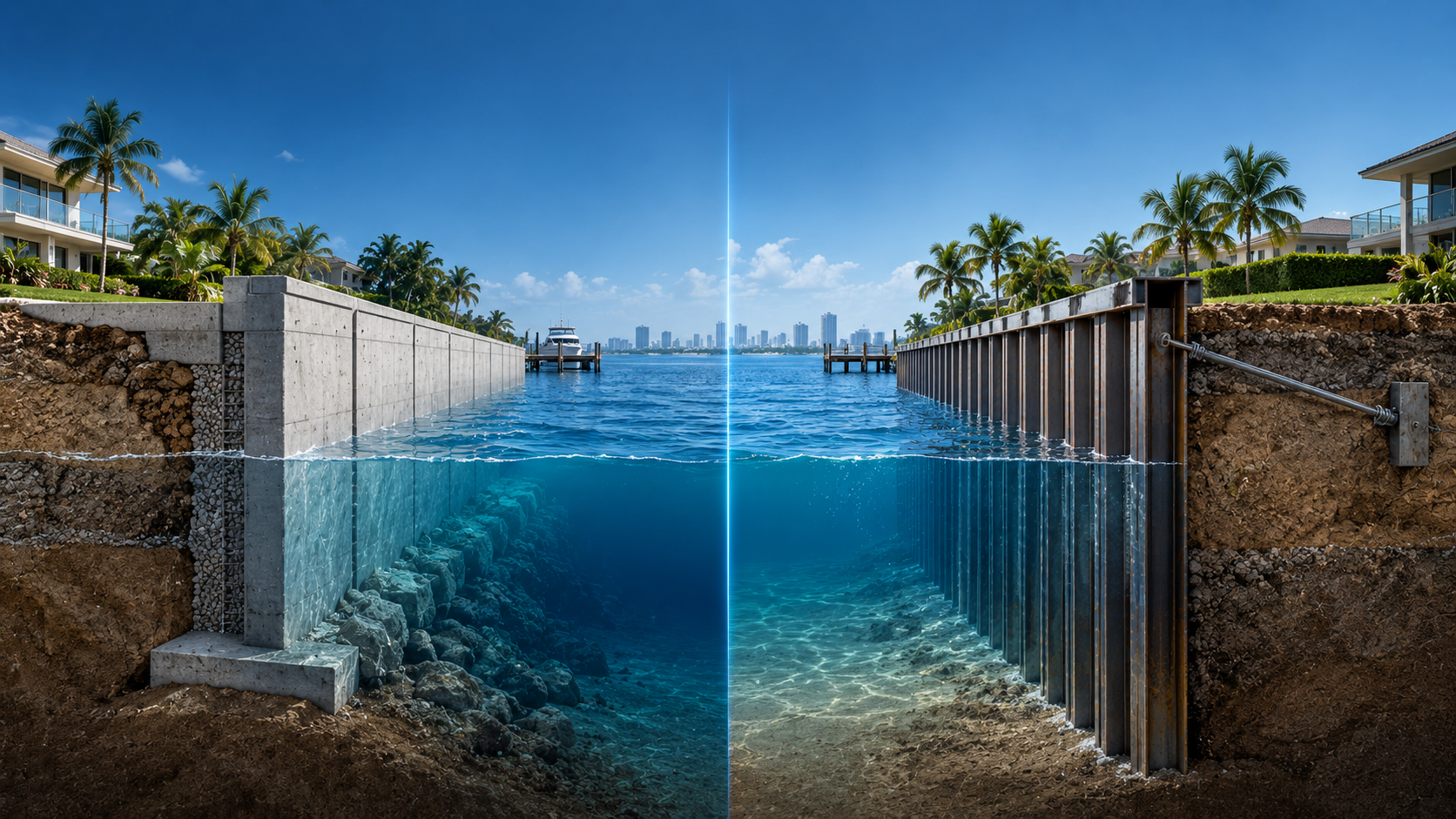
When evaluating seawall materials, property owners face a critical choice between concrete panels and steel sheet piles. Concrete panels offer a rigid, mass-based barrier that relies on weight and solid construction to resist wave action. Steel sheet piles use interlocking sections driven deep into the ground, providing flexibility and deep anchoring. Each material performs differently depending on soil conditions, water chemistry, installation access, and long-term maintenance commitment. Making an informed choice requires understanding these differences clearly before committing to a contractor or budget.
Why Concrete Seawalls Are Popular for Waterfront Property Design
- Ideal for stable soils with minimal shifting or settlement risk.
- Lifespan of 30 to 50 years.
- High compressive strength resists impact from debris and ice effectively.
- Smooth, finished appearance suits residential and commercial waterfront properties.
- Lower material production cost compared to steel in many regions.
Why Steel Seawalls Handle Heavier Loads and Ground Movement
- Ideal for soft or loose soils where deep penetration is required for stability.
- Lifespan of 25 to 40 years without corrosion protection, up to 50 years with coatings.
- Excellent tensile strength provides flexibility against heavy loads and ground shifts.
- Deep anchoring capability suits high-energy wave environments and deep water locations.
- Faster installation in most soil types compared to concrete panel systems.
Critical Factors That Influence Material Selection for Your Site
The decision between concrete and steel depends heavily on your specific shoreline conditions and height of your seawall. Soil type determines whether deep pile driving is feasible or if a surface foundation is sufficient. Water salinity drives corrosion rates and dictates maintenance frequency. Installation access affects equipment choices and overall project timeline. Budget constraints may favor one material initially, but long-term maintenance costs often reverse that advantage. Consulting a coastal engineer who can test your site and provide material-specific recommendations is a wise investment before proceeding.
Consulting a coastal engineer who can test your site is the surest way to get material-specific advice, and knowing what coastal engineering actually covers makes that conversation far more productive.
What Property Owners Should Evaluate Before Installing a Seawall
- Test soil chemistry before selecting material to avoid unexpected failures.
- Compare total lifecycle costs including installation, maintenance, and potential repairs.
- Evaluate permit requirements early, as some jurisdictions restrict certain materials near sensitive habitats.
- Request multiple contractor quotes for both concrete and steel systems to compare pricing.
- Plan for future sea level rise by selecting seawall height and material that can adapt.
Installation Logistics That Affect Your Project Timeline and Budget
Installing a concrete panel seawall requires heavy crane access, wide staging areas, and precise foundation preparation. The panels must be transported on flatbed trucks and lifted into place one by one. Joint sealing and backfill compaction add time to the schedule. Steel sheet pile installation uses vibratory or impact hammers that can work from barges or narrow land strips. The driving process is faster but generates vibration and noise that may require permits or neighbor notifications. Each method has distinct advantages depending on your property’s layout and proximity to existing structures.
If your property sits close to existing structures, review the common causes of permit delays on a seawall project before you commit to an installation method.
Environmental Impact and Regulatory Considerations for Both Materials
- Concrete walls block groundwater flow, potentially affecting nearby vegetation and drainage patterns.
- Steel walls allow some water passage through interlocking joints but may cause soil erosion behind the wall.
- Permit applications require engineering drawings, soil reports, and environmental impact assessments.
- Installation methods must comply with noise and vibration limits during sensitive wildlife seasons.
Conclusion
Selecting between concrete panel and steel sheet pile seawalls is not a one-size-fits-all decision. Concrete panels deliver a long-lasting, attractive solution for stable, calm environments where appearance and low maintenance are priorities. Steel sheet piles provide deep anchoring and structural flexibility for challenging soils, deep water, and high-energy wave zones, but may require ongoing corrosion management. No single material is universally superior. The most reliable approach involves thorough site testing, consultation with a coastal engineer, and comparison of multiple contractor proposals. Investing time in proper evaluation at the beginning will protect your shoreline investment and provide peace of mind for decades to come.