



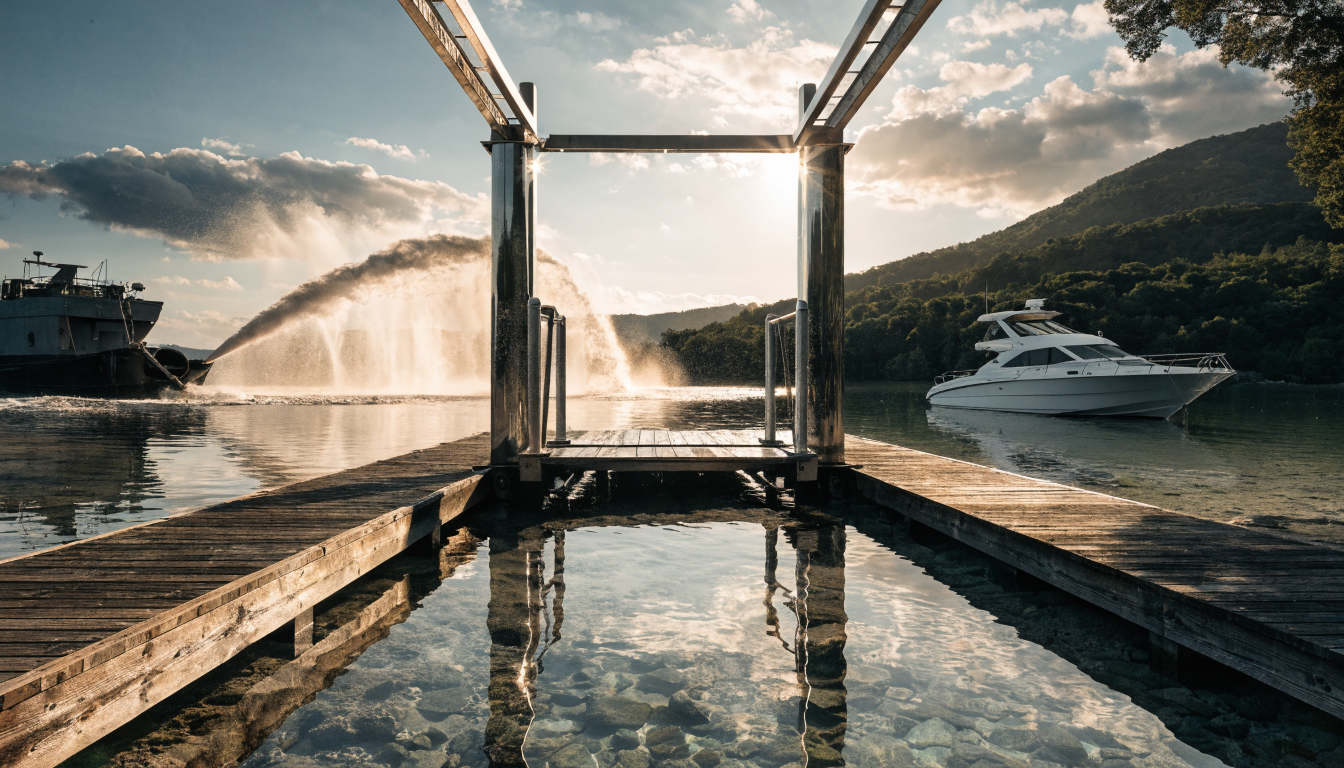
Sediment buildup is a common reality around shorelines, marinas, and lakefront properties. If you are planning to install a boat lift or maintain one, you will face the question of whether to dredge first or after the lift is in place. The right choice depends on site conditions, the type of lift, and long term maintenance goals.
This guide breaks down the benefits and drawbacks of each approach. By understanding the trade offs, you can make a smart decision that protects your equipment and keeps your waterfront functional for years to come.
Dredging Before Installing a Boat Lift
Dredging before installation gives you accurate depth planning from the start. You will know the exact water depth and bottom conditions around the lift footprint, which helps you set anchor points, piles, or supports with confidence. A clean, predictable seabed also reduces the risk of damage to lift components during installation and makes leveling and positioning much easier.
By dredging first, you minimize the chance that dredge spoils will interfere with lift rails, rollers, or vertical posts after placement. If your project requires permits, pre-project dredging can simplify design and alignment with shoreline stabilization or habitat restrictions. The main drawback is the upfront cost and the uncertainty of future sedimentation from storms or currents.
Dredging After Installing a Boat Lift
Dredging after installation lets you work to actual conditions rather than predictions. You can remove sediment as needed based on observed buildup and water depth, avoiding over dredging. This approach also protects existing hardware because you can time the work to minimize disruption to cables, hydraulics, and electrical lines.
Post installation dredging provides budget flexibility by spacing costs over time. However, it is more complex because you must dredge around piles, rails, and other lift hardware, which may require temporary removal or protection of components. If sedimentation is significant, you may face downtime while coordinating boat slip access, and sediment may return around the lift footprint.
Key Considerations for Timing Your Dredging
When deciding the best timing, evaluate these site specific factors.
- Check manufacturer recommended depth and clearance for your lift model against current site depths.
- Consider sediment type and accumulation rate, as mud settles quickly while sand shifts with currents.
- Review environmental permits, turbidity controls, and disposal plan requirements.
- Assess access for dredging equipment with or without the lift already in place.
Decision Making Guide for Your Project
If your current depth is consistently below the lift required clearance and you have not yet installed the lift, dredge before installation to ensure proper fit and performance. This gives you a clean start and avoids complications later.
If the lift is already installed and sediment buildup is manageable, monitor the area and dredge only as needed. For sites with high sedimentation rates, consider a preinstall dredge to secure proper space, then schedule periodic maintenance dredging afterward.
Practical Planning Steps to Follow
A structured approach helps coordinate dredging and lift installation smoothly.
- Assess current depths at the lift footprint and along access routes.
- Consult with the lift installer and a licensed dredging contractor.
- Get a hydrographic survey for precise depth data and sediment type.
- Check permitting needs with local, state, and federal agencies.
- Develop a phased schedule to minimize downtime and disruption.
Conclusion
Choosing whether to dredge before or after installing a boat lift depends on your site conditions, lift model, environmental considerations, and budget. Ocean Consulting, specialize in helping you create a proactive plan that involves a qualified dredging contractor and your lift installer to optimize depth and protect equipment.
By assessing depth requirements, sediment dynamics, and permitting needs early, you can time dredging to support a smooth installation or efficient postinstall maintenance. The right timing will keep your lift functional and your waterfront accessible for years.