

Coastal development projects in Florida often intersect with coral reef ecosystems, particularly in South Florida and the Florida Keys. When construction activities may affect reef habitats, coral relocation permits and coral transplantation requirements frequently become part of the approval process.
These requirements are reviewed by agencies such as the Florida Department of Environmental Protection (FDEP), Miami-Dade DERM, the Florida Fish and Wildlife Conservation Commission (FWC), the National Oceanic and Atmospheric Administration (NOAA), and in some cases the U.S. Army Corps of Engineers (USACE).
At Ocean Consulting, we help project teams navigate coral relocation requirements, reef impact assessments, environmental permitting, and regulatory coordination throughout Florida.
How Relocation Stages Impact Timelines
Phase by phase planning helps teams understand where time is added and how delays can be reduced. Pre-construction coral surveys are the first major step. Experts map colonies, assess species and health, and document exact locations within the project footprint.
The survey report identifies which corals to relocate, preferred sites, and survival expectations. Regulators require this documentation as part of the permit package. Following surveys, permit approval from multiple agencies can take 1-2 months.
Permitting & Environmental Assessment
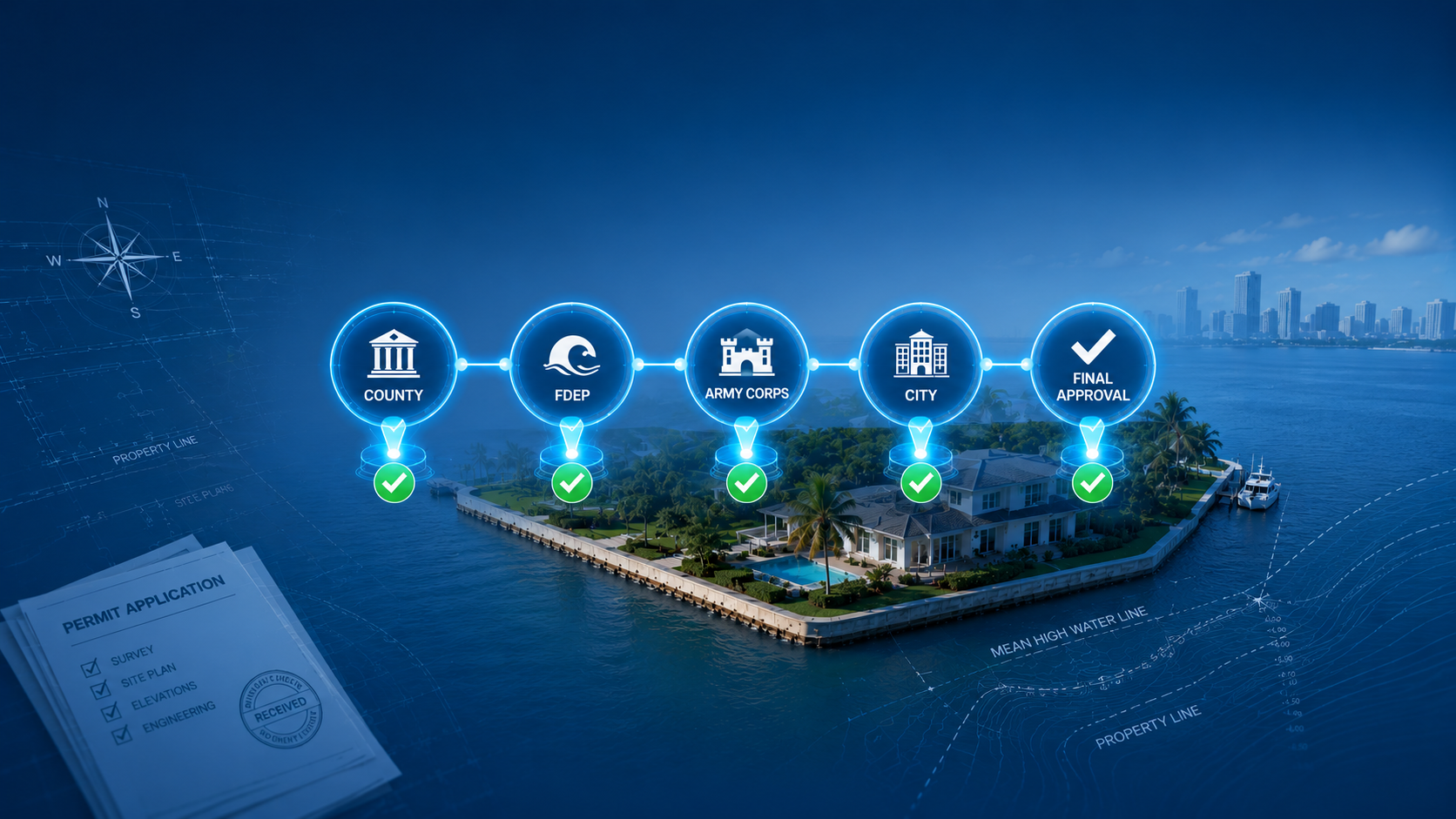
Permits for coral relocation come from County, State, and Federal agencies, and timelines vary by project scope. County and State agencies review plans to confirm that moves meet ecological and legal requirements. Federal agencies may provide input for protected corals or special habitats.
Projects requiring Environmental Resource Permits, USACE authorizations, or approvals from agencies such as FDEP, Miami-Dade DERM, NOAA, or the Florida Keys National Marine Sanctuary may experience longer review periods due to interagency coordination requirements.
Submitting complete and accurate documentation early in the process can significantly reduce requests for additional information and help keep project schedules on track.
Collection & Transplantation
Once approvals are obtained, qualified marine biologists carefully collect and relocate approved coral colonies to designated recipient sites. The physical relocation process may take only a few days for smaller projects, while larger or more complex efforts can require multiple phases over several weeks.
Following transplantation, long term monitoring is often required to assess survival, growth, and adaptation. Depending on permit conditions and coral species, monitoring programs may continue for several months or even several years after relocation is completed.
Post-Relocation Monitoring
After relocation, monitoring verifies coral survival and adaptation to the new site. The period typically spans several months to a year depending on species and regulatory expectations. Regular checks assess health, growth, and stress indicators.
Reporting to agencies is common, and some projects require longer observation. Construction resumes only after monitoring confirms acceptable results.
Factors That Extend Timelines
Several factors can extend coral relocation schedules and should be considered during project planning:
- Permit Review Delays – Agencies may request additional information, revisions, or supporting documentation before approving relocation activities.
- Weather Conditions – Storms, high winds, rough seas, and hurricane season can postpone surveys, relocation work, and monitoring activities.
- Large Numbers of Coral Colonies – Projects involving numerous colonies require more time for identification, mapping, handling, and transplantation.
- Protected or Sensitive Species – Additional regulatory review may be required when protected coral species or sensitive marine habitats are present.
- Site Selection Challenges – Finding and approving a suitable recipient site with appropriate depth, water quality, and habitat conditions can add time.
- Incomplete Project Documentation – Missing survey data, inaccurate mapping, or incomplete permit applications can slow agency reviews.
- Construction Schedule Changes – Modifications to project design or construction sequencing may require updates to relocation plans and approvals.
- Post Relocation Performance Issues – If monitoring identifies significant coral stress or mortality, agencies may require corrective actions or extended monitoring periods.
By identifying these potential obstacles early, project teams can build realistic schedules and reduce the likelihood of unexpected delays.
Coordination Roles and Responsibilities
Effective relocation requires a clear team structure. A licensed marine biologist leads habitat work, supported by an environmental consultant and a contractor with reef experience. Regulators like DERM, FWC, and NOAA provide oversight during specific phases.
Clear communication among all parties keeps the relocation plan aligned with project goals. Early engagement with regulators reduces surprises during permit review. Each team member plays a distinct role in keeping the timeline on track.
Conclusion
Coral relocation is a necessary component of many Florida waterfront and marine construction projects. While surveys, permitting, transplantation, and monitoring requirements can influence project schedules, proactive planning helps reduce delays and keeps projects on track.
At Ocean Consulting, we assist project teams throughout Florida with coral surveys, environmental permitting, regulatory coordination, and relocation planning to help support compliance while maintaining project timelines.