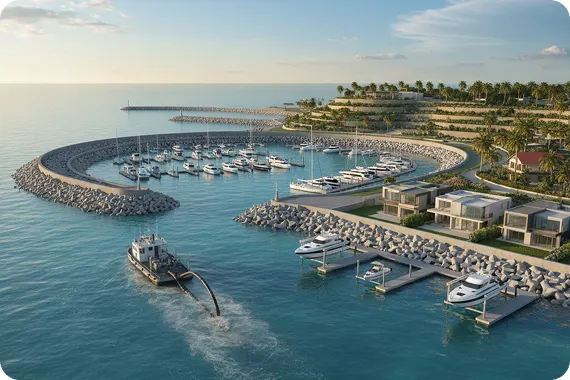


In Florida’s coastal construction environment, water quality is not a passive metric, it is an active constraint that can halt a project overnight. From dredging operations in Biscayne Bay to residential seawall installations along the Intracoastal, even minor exceedances in turbidity or dissolved oxygen can trigger immediate compliance actions from regulators. The challenge is amplified by Florida’s 1,350 mile coastline, where tidal exchange, storm events, and sensitive marine habitats create constantly shifting baseline conditions.
Water quality monitoring in Florida is therefore not just about data collection. It is about maintaining regulatory compliance in a dynamic system where turbidity plumes can migrate faster than expected, salinity gradients shift with tides, and nearby seagrass beds or coral communities demand strict protection thresholds. Agencies such as the Florida Department of Environmental Protection (FDEP) and the US Army Corps of Engineers (USACE) enforce these standards rigorously, particularly during marine construction activities where the risk of environmental impact is highest.
This guide breaks down the methods, regulatory frameworks, and field-tested strategies behind effective water quality monitoring in Florida, with a focus on real-world application during active marine construction.
Florida Water Quality Rules You Must Know
Florida’s regulatory framework for marine construction is built around one principle: no measurable harm to adjacent waters and habitats. In practice, that translates into strict, enforceable thresholds tied to your permit.
For most marine infrastructure and over water structures, two agencies govern compliance:
Florida Department of Environmental Protection (FDEP)
Oversees state level water quality standards, including turbidity thresholds, dissolved oxygen minimums, and anti degradation policies under Chapter 62 302, F.A.C. Any activity that disturbs submerged sediments must demonstrate that it will not degrade existing water quality beyond allowable limits.
US Army Corps of Engineers (USACE)
Regulates dredging, filling, and in water construction under Section 404 of the Clean Water Act and Section 10 of the Rivers and Harbors Act. Their focus extends beyond water chemistry to include impacts on navigation, wetlands, and federally protected habitats.
For contractors and developers, compliance is not theoretical. Permits typically include project specific turbidity thresholds, monitoring frequencies, and reporting protocols. A common requirement is that turbidity cannot exceed 29 Nephelometric Turbidity Units (NTU) above background levels at designated compliance stations. That “above background” clause is where many projects fail, especially in tidal systems where baseline conditions shift hourly.
We have seen projects delayed weeks due to poorly designed monitoring programs that failed to account for tidal flushing or wind driven sediment resuspension. Regulators do not accept intent, they require defensible data.
Core Methods for Coastal Water Quality Monitoring
Effective water quality monitoring in Florida is not a single test or instrument. It is a coordinated system that connects real time field data to regulatory thresholds and ecological risk. The goal is not just to measure impact, but to control it while work is ongoing.
Turbidity Monitoring
Turbidity is the primary compliance driver for most marine construction activities. It directly reflects suspended sediments generated during dredging, pile driving, or shoreline stabilization.
Key components of a defensible turbidity monitoring program include:
- Baseline vs. Background Sampling: Before construction begins, we establish baseline conditions across tidal cycles to understand natural variability. During construction, background samples are collected up to the current of the activity to define the real time control condition. This distinction is critical, especially in areas with strong tidal exchange like Biscayne Bay.
- NTU Threshold Management: Compliance is measured in Nephelometric Turbidity Units, with strict limits relative to background. The challenge is not hitting the limit once, it is maintaining compliance continuously as conditions change.
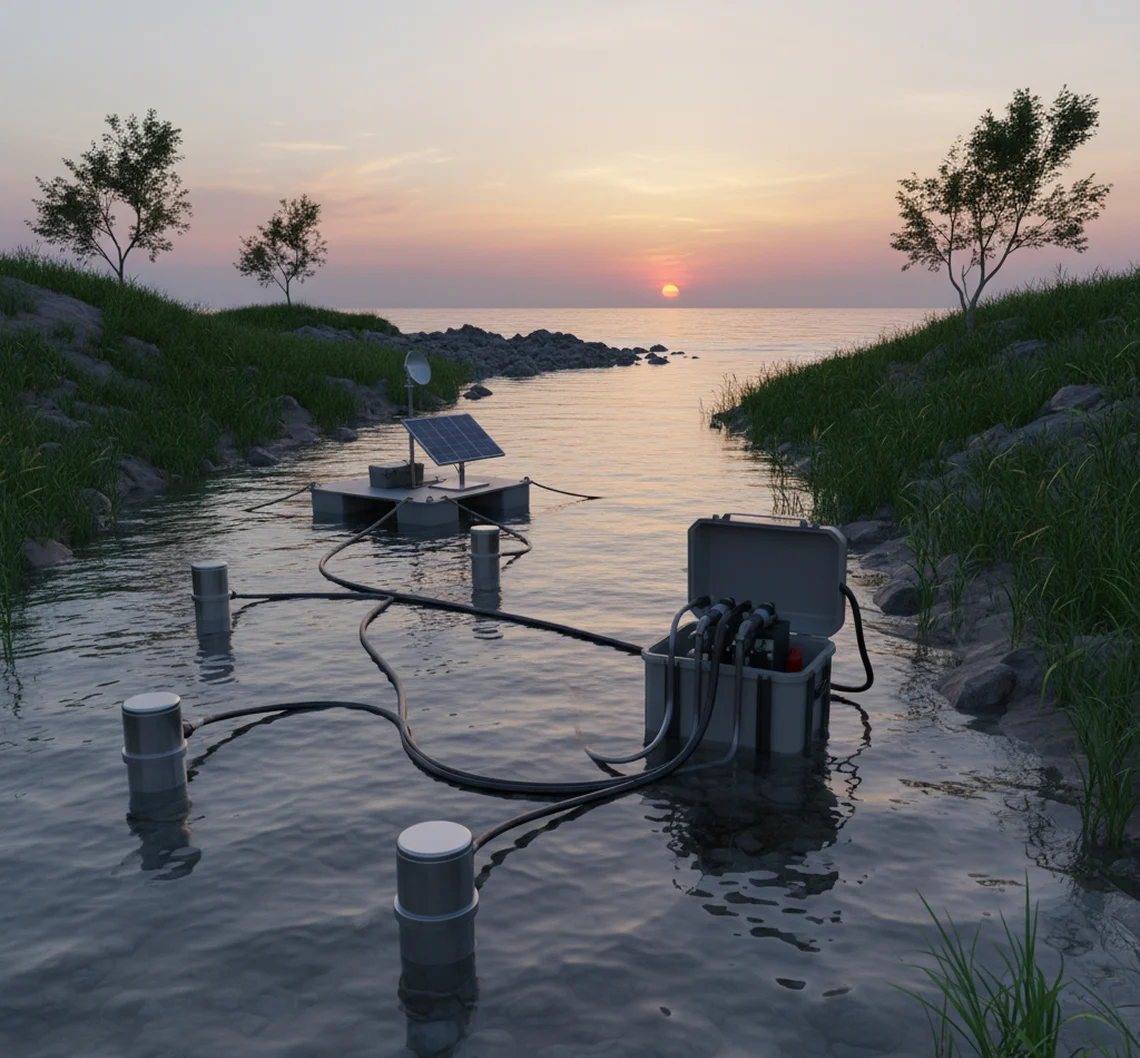
- Active Field Monitoring: During dredging or turbidity monitoring for seawall and dock construction, our teams deploy calibrated handheld turbidity meters at compliance stations multiple times per day. We position these stations based on current direction, not static maps, ensuring we are measuring actual plume migration rather than assumed impact zones.
- Real Time Response: When turbidity trends upward, immediate adjustments are made. This can include modifying dredge techniques, repositioning turbidity curtains, or temporarily pausing work. This proactive approach is what prevents regulatory exceedances from becoming violations.
Water Quality Sampling
While turbidity drives enforcement, broader water chemistry determines ecological impact. A compliant project can still damage marine habitats if parameters like dissolved oxygen or salinity fall outside acceptable ranges.
Our monitoring programs typically include:
- Dissolved Oxygen (DO): Critical for marine life survival. Sediment disturbance can reduce oxygen levels by releasing organic material and increasing biological demand. We monitor DO to ensure levels remain within FDEP standards, particularly in low circulation areas.
- Salinity: Florida’s coastal systems often depend on stable salinity gradients. Construction activities can disrupt these gradients, especially near inlets or estuarine environments. Continuous tracking helps detect shifts that could stress seagrass or fisheries.
- Nutrients (Nitrogen and Phosphorus): Elevated nutrient levels can trigger algal blooms, reducing water clarity and oxygen levels. Monitoring ensures that sediment disturbance is not releasing excess nutrients into the water column.
This multi parameter approach transforms monitoring from a compliance checkbox into a full ecosystem assessment.
Benthic Habitat Monitoring
Water quality does not exist in isolation. Its true impact is measured on the seafloor.
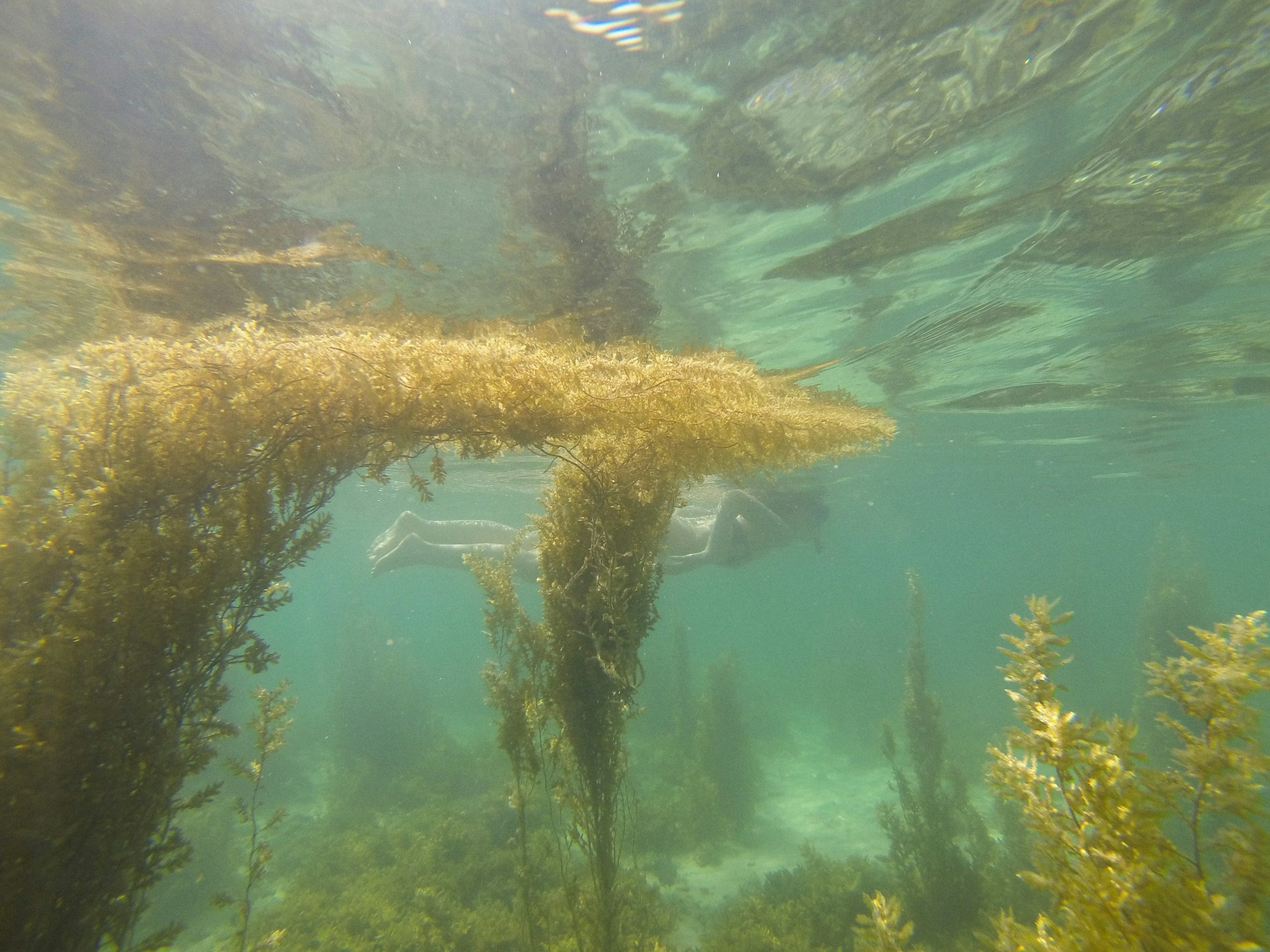
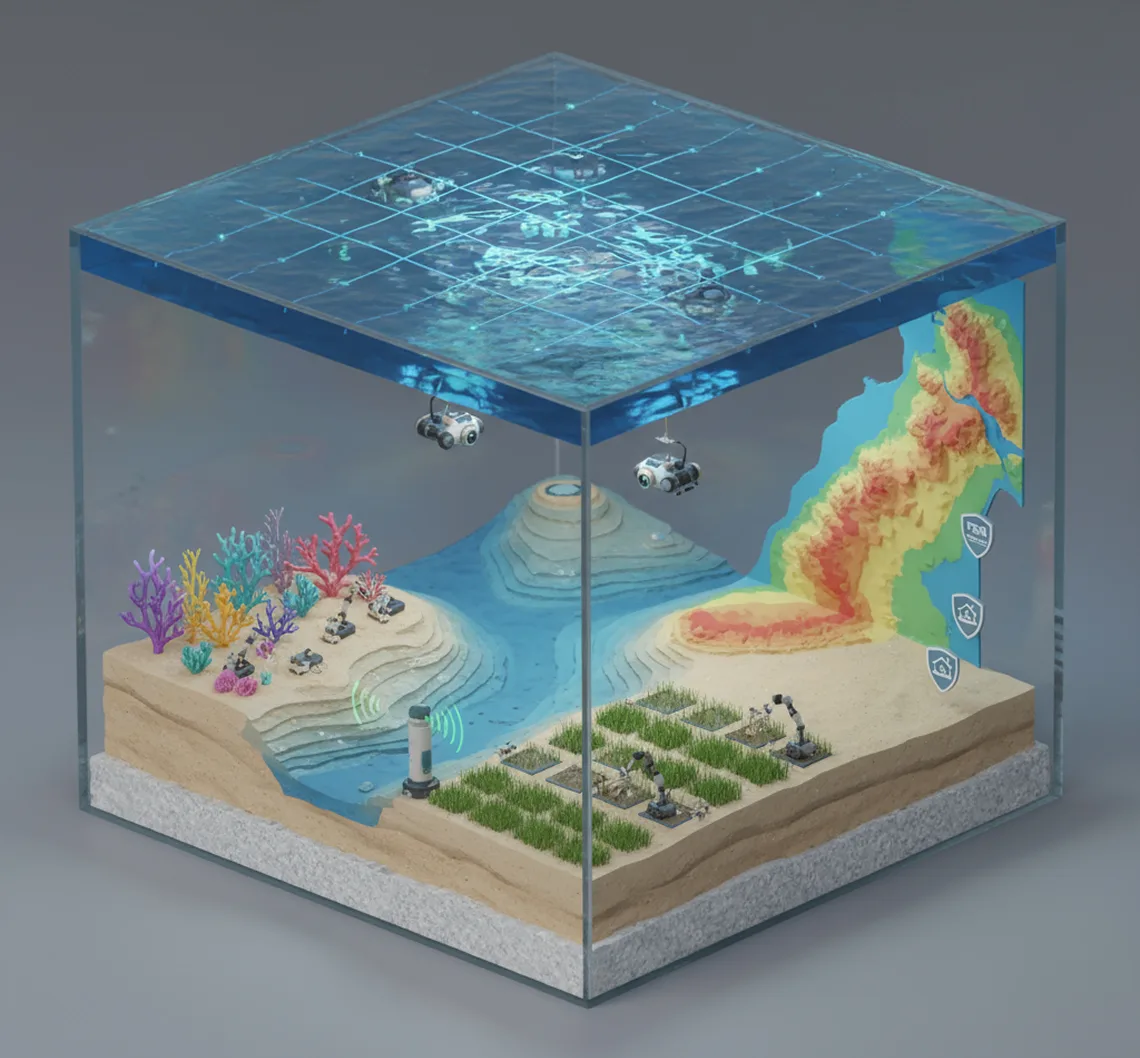
- Seagrass Protection and Mitigation: Seagrass requires light penetration to survive. Increased turbidity reduces photosynthesis, leading to die off. We directly correlate turbidity data with light attenuation and seagrass health, ensuring that compliance thresholds align with biological reality, not just regulatory minimums.
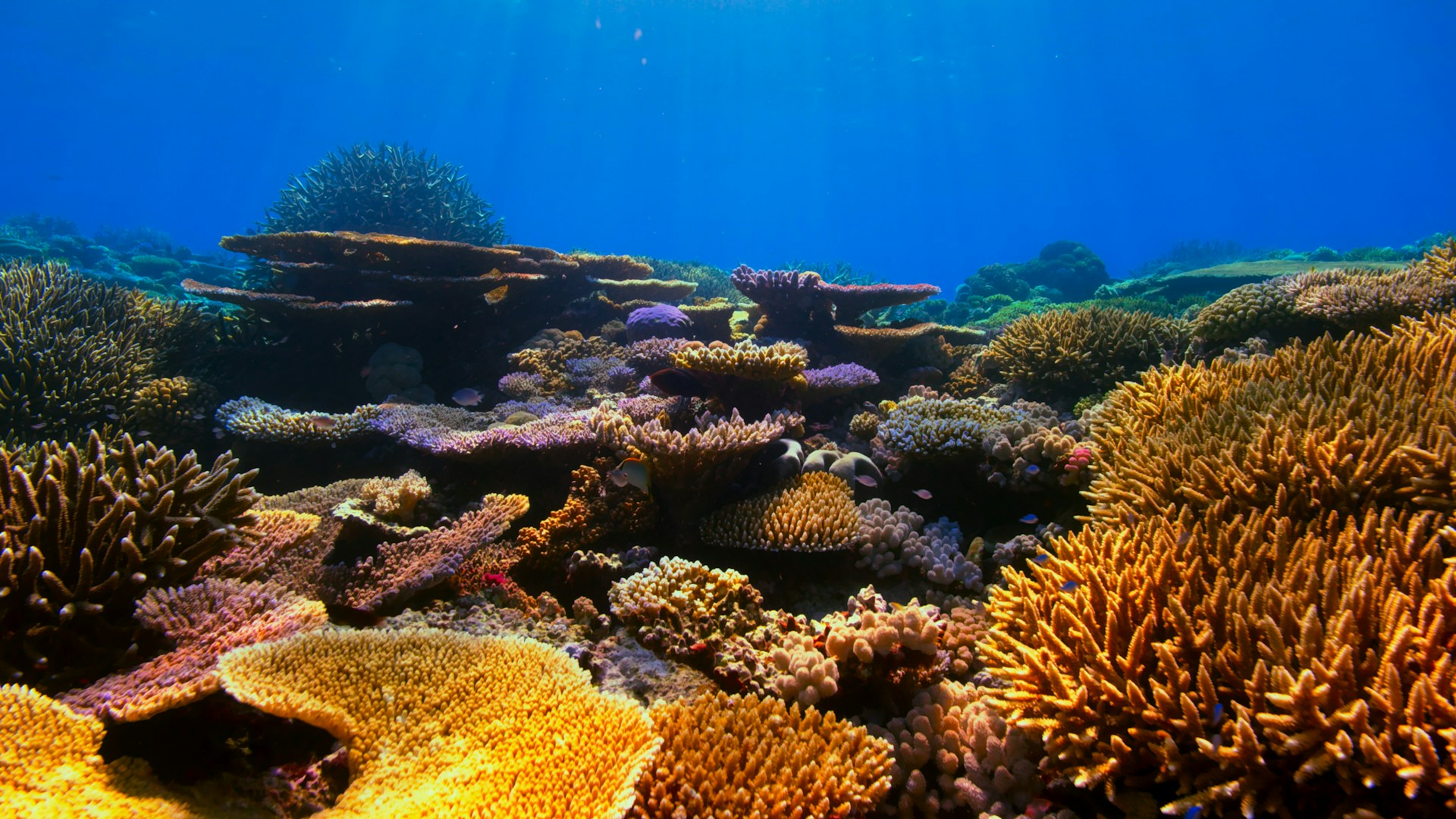
- Coral Relocation Monitoring: In areas requiring coral relocation, suspended sediments can smother coral tissue and reduce survival rates. We integrate turbidity monitoring with coral observation protocols to confirm that relocation efforts remain viable throughout construction.
- Benthic Surveys and Hydrographic Scanning: Pre and post construction surveys allow us to map substrate conditions and detect changes in sediment distribution. This provides defensible evidence that project activities have not caused unintended habitat degradation. By linking turbidity to benthic outcomes, we move beyond surface level compliance and address the actual environmental endpoints regulators care about.
Common Challenges During Marine Construction
Most compliance failures are not caused by lack of effort. They come from misreading how fast coastal conditions change once construction begins.
One of the most common issues we encounter is false confidence in turbidity containment systems. Turbidity curtains and booms are often installed correctly on day one, but they degrade quickly under real conditions. Strong tidal currents can pull skirts upward, vessel traffic can create wake induced gaps, and anchoring points can shift in soft sediments. The result is sediment escaping beyond the compliance zone, often without immediate visual detection.
Another recurring problem is misaligned sampling strategy. Many projects rely on fixed monitoring points that do not adapt to tidal direction. In Florida’s bidirectional tidal systems, this creates blind spots. A compliance station that was up current in the morning can become down current within hours, leading to underreported exceedances or delayed detection.
Weather adds another layer of complexity. Wind driven resuspension can elevate background turbidity before construction even begins for the day. Without accurate real time background sampling, contractors may unknowingly operate within a reduced compliance margin. Afternoon storms can further amplify turbidity spikes, pushing readings beyond allowable NTU thresholds even if dredging activity remains constant.
We also see challenges with equipment calibration and data integrity. Handheld turbidity meters that are not calibrated daily can drift, creating discrepancies between reported and actual conditions. In a regulatory audit, inconsistent data is treated as non compliance.
Conclusion
In Florida’s regulated coastal environment, water quality monitoring is not a passive requirement, it is a cost control mechanism. Projects that rely on reactive sampling often discover problems after thresholds are exceeded, when the only options left are shutdowns, corrective actions, and regulatory scrutiny. Each of those outcomes carries direct financial impact through delays, idle equipment, and extended permitting timelines.
At Ocean Consulting, we approach water quality monitoring in Florida as an active layer of project management. It is how we protect construction schedules, reduce regulatory risk, and ensure that marine infrastructure is built without compromising the ecosystems that define Florida’s coastline.