

Coastal development has always been tied to economic opportunity, transportation, and cultural identity. Yet building near the shoreline also introduces persistent exposure to flooding, erosion, storm surge, and saltwater intrusion. As weather events intensify and sea levels continue to rise, the margin for design error grows smaller. Coastal engineering now plays a defining role in determining whether shoreline communities experience repeated disruption in stability.
Resilient coastal communities are not created by a single structure or project. They are achieved through integrated planning, predictive science, environmental awareness, and infrastructure design that anticipates change rather than reacting to damage. Coastal engineering provides the framework that turns these principles into actionable solutions.
Defining Coastal Resilience Through Engineering Practice
Resilience in coastal settings refers to the ability of a community to resist physical damage, maintain essential functions during disruption, and recover efficiently after impact. From an engineering perspective, resilience is measured through the performance of structures, continuity of utilities, integrity of transportation corridors, and stability of natural buffers.
Coastal engineers approach resilience through systems thinking. Shore protection, drainage networks, public infrastructure, and ecological features are treated as connected components rather than isolated assets. This integrated perspective allows designs to account for cascading failure risks that often occur during major storm events.
Advanced Hazard Characterization and Predictive Modeling
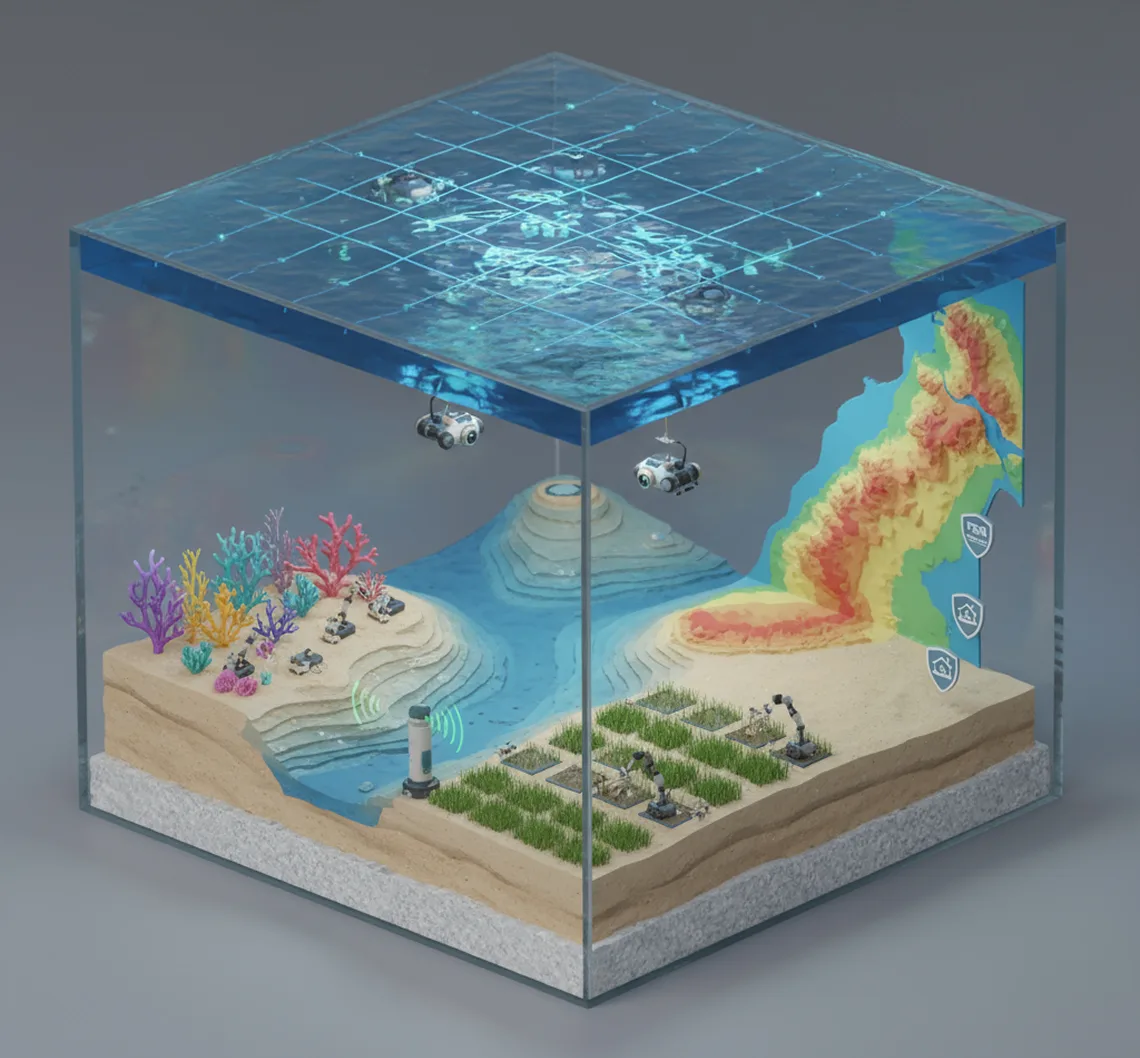
Modern coastal engineering relies heavily on predictive analysis. Field surveys are combined with wave transformation models, storm surge simulations, sediment transport calculations, and floodplain mapping. These tools produce scenario-based forecasts of shoreline movement, overtopping risk, and structural loading.
This predictive capability allows engineers to test how protective measures perform under a range of future conditions rather than only historical events. Sensitivity analysis evaluates how uncertainty in sea level projections or storm intensity affects design outcomes. As a result, projects are optimized for reliability over decades of service.
Data-driven hazard characterization also supports local planning decisions such as building elevation standards, evacuation route design, and land use zoning.
Structural Coastal Area Defense Systems
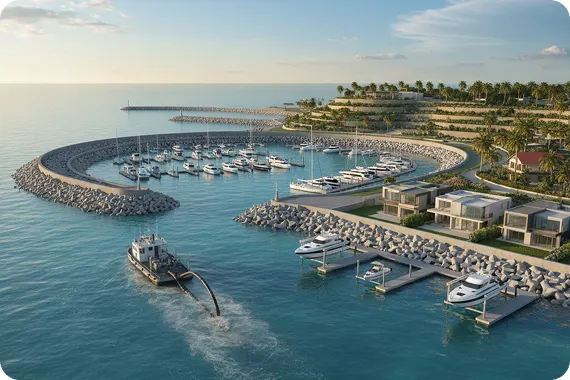
Structural protection is fundamental to safeguarding coastal communities, dense development zones, and critical public facilities. Breakwaters, surge barriers, Seawalls and bulkheads must withstand powerful wave forces, shifting soils, and constant saltwater exposure. Coastal engineering provides the scientific foundation needed to calculate hydrodynamic loading, design stable foundations, manage wave runup, and select corrosion-resistant materials. Without specialized coastal engineering expertise, protection structures risk premature failure, unintended erosion, and increased hazard to nearby properties.
Well-designed defense systems also control how wave energy and sediment move along the shoreline, preventing risk transfer to adjacent areas. Aligning local projects with these frameworks strengthens design reliability, supports regulatory approval, and builds community confidence in shoreline safety.
Hybrid and Nature-Based Protection Systems
Experienced practitioners increasingly adopt hybrid solutions that combine engineered structures with ecological systems. Living shorelines, dune reinforcement, marsh creation, and reef restoration are designed using hydraulic and sediment transport principles rather than decorative landscaping.
These systems reduce wave energy through friction and depth variation, stabilize sediment through root networks, and provide an adaptive response to gradual water level change. Hybrid designs may include low-profile rock sills or buried toe protection to ensure stability during extreme events while preserving natural shoreline appearance.
From an engineering standpoint, these systems are evaluated through performance metrics such as wave attenuation rate, shoreline retreat reduction, and sediment retention efficiency. This quantitative approach differentiates professional ecological engineering from basic planting efforts.
Integrated Coastal Flood Management
Flood protection in coastal settings requires coordination between shoreline defenses and inland drainage. Surge barriers without adequate stormwater discharge create interior flooding. Drainage improvements without shoreline protection invite backflow during high tide.
Coastal engineers design pump stations, tide gates, retention basins, gravity outfalls, and canal systems as unified networks. Hydraulic models simulate rainfall runoff, tide cycles, and surge events together. This is where the importance of coastal engineering becomes clear.
Integrated flood management is increasingly recognized as a primary determinant of community resilience in low-elevation coastal cities.
Shoreline Engineering for Future Conditions
Resilient design requires explicit consideration of future water levels and storm patterns. Engineers apply probabilistic design methods that incorporate sea level projections and evolving storm statistics. Structures are elevated with freeboard allowances. Utility corridors are routed outside projected flood zones. Shoreline setbacks are established based on erosion trend analysis.
This forward-focused approach transforms coastal engineering challenges into practical solutions that prevent premature infrastructure obsolescence. By translating climate projections into actionable planning criteria, communities can adopt future condition design standards that reduce disruption, lower over-time costs, and improve overall shoreline resilience.
Infrastructure Hardening and Rapid Recovery Design
Critical infrastructure must remain functional or be quickly restorable after a storm impact. Coastal engineers evaluate the vulnerability of bridges, road embankments, electrical substations, communication hubs, and water treatment plants.
Design upgrades may include scour protection at bridge foundations, elevated control systems, waterproof electrical enclosures, and redundant utility routing. Ports and navigation channels are designed with wave-tolerant configurations to allow faster reopening after severe weather.
This approach shifts design focus from damage avoidance alone toward controlled performance and rapid recovery capability.
Environmental Integration and Regulatory Strategy
Expert coastal engineering recognizes that regulatory compliance and environmental stewardship are inextricably linked to technical design. Projects incorporate habitat protection, water quality safeguards, and sediment management from early concept stages.
Engineers prepare environmental documentation, coordinate agency permitting, and design mitigation features where impact cannot be fully avoided. This proactive integration prevents project delays and builds public trust.
Balancing protection of human assets with preservation of coastal ecosystems is now a defining measure of professional coastal engineering practice.
Stakeholder Collaboration and Risk Communication
Effective resilience programs depend on public understanding of risk and acceptance of protection measures. Engineers translate technical findings into clear communication for community leaders, residents, and funding agencies.
Workshops, visual simulations, and scenario maps help stakeholders grasp future risk. This transparency supports consensus on funding, construction priorities, and land use adjustments.
Expert communication is often what transforms technically sound projects into implemented solutions.
Economic Performance of Resilience Investment
From an economic standpoint, coastal engineering provides risk reduction returns through avoided losses. Studies consistently show that every dollar invested in hazard mitigation yields multiple dollars in avoided recovery spending.
Protected infrastructure maintains real estate stability, ensures tourism continuity, and facilitates commercial operations. Reduced disaster recovery dependence strengthens municipal financial planning and insurance market confidence.
Engineering-driven resilience is therefore not only a safety measure but also a strategic economic policy tool.
Continuous Advancement in Coastal Engineering Practice
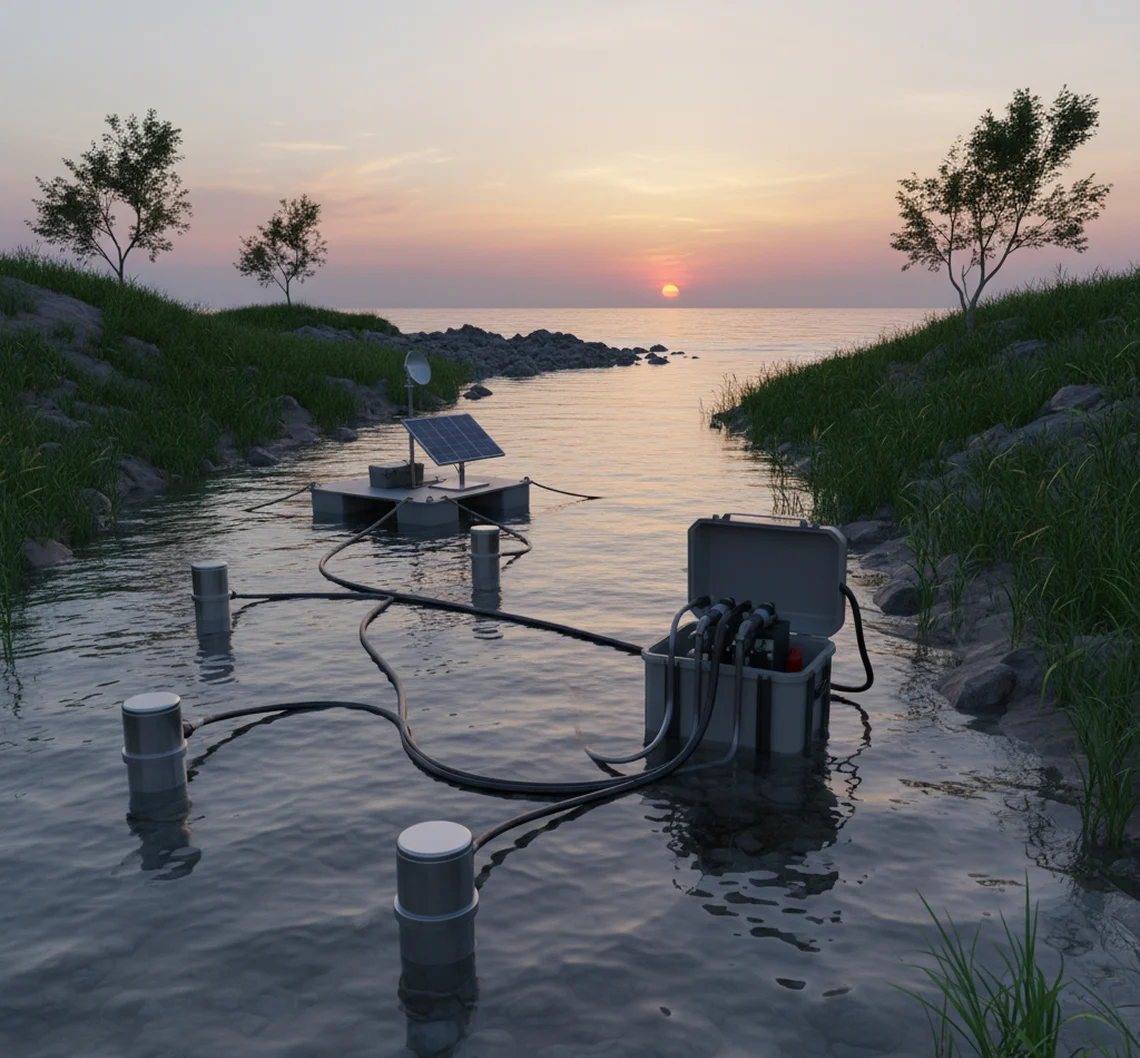
The field continues to advance through real-time monitoring, remote sensing, autonomous survey platforms, and artificial intelligence-based modeling. Performance data from completed projects informs future design improvement.
Adaptive management frameworks allow engineers to refine protection measures as shoreline conditions evolve. This dynamic approach ensures the long-term relevance of resilience systems.
The Way Forward
Resilient coastal communities are built through knowledge, preparation, and disciplined engineering practice. Coastal engineering converts ocean forces, flood behavior, and shoreline change into measurable design conditions that guide safe development and infrastructure planning. Federal research and technical guidance play an important role in shaping proven protection strategies. Programs such as the United States Army Corps of Engineers Coastal Risk Reduction Program provide nationally recognized engineering frameworks for reducing coastal hazards and improving lasting community safety.
When local governments and private stakeholders align their planning with these established technical standards, the outcome is stronger protection, reduced recovery costs, and greater confidence in shoreline management decisions. Investing in professional coastal engineering is not simply a response to environmental risk. It is a forward planning decision that safeguards people, property, public services, and natural coastal systems for years ahead.